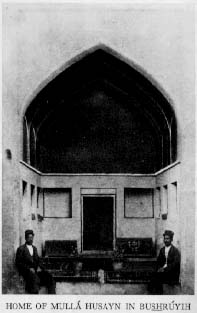

 HE
death of Siyyid Kazim
was the signal for renewed activity on the part of his enemies. Athirst
for leadership, and emboldened by his removal and
the consequent dismay of his followers, they reasserted
their claims and prepared to realise their ambitions.
For a time, fear and anxiety filled the hearts of Siyyid Kazim's
faithful disciples, but with the return of Mulla Husayn-i-Bushru'i
from the highly successful mission with which he
had been entrusted by his teacher, their gloom was dispelled.(1)
It was on the first day of Muharram, in the year 1260 A.H.,(2) that Mulla Husayn came back to Karbila. He cheered and strengthened the disconsolate disciples of his beloved chief,
reminded them of his unfailing promise, and pleaded for unrelaxing
vigilance and unremitting effort in their search for
the concealed Beloved. Living in the close neighbourhood
of the house the Siyyid had occupied, he, for three days,
was engaged continually in receiving visits from a considerable
number of mourners who hastened to convey to him, as
the leading representative of the Siyyid's disciples, the expression
of their distress and sorrow. He afterwards summoned
a group of his most distinguished and trusted fellow-disciples
and enquired about the expressed wishes and the
last exhortations of their departed leader. They told him
that, repeatedly and emphatically, Siyyid Kazim had bidden
them quit their homes, scatter far and wide, purge their
hearts from every idle desire, and dedicate themselves to the
quest of Him to whose advent he had so often alluded. "He
told us," they said, "that the Object of our quest was now
As the year sixty, the year that witnessed the birth of the
promised Revelation, had just dawned upon the world, it
would not seem inappropriate, at this juncture, to digress
from our theme, and to mention certain traditions of Muhammad
Mulla Husayn, having acquitted himself of the obligation
he felt to urge and awaken his fellow-disciples, set out from
Karbila for Najaf. With him were Muhammad-Hasan, his
brother, and Muhammad-Baqir, his nephew, both of whom
had accompanied him ever since his visit to his native town
of Bushruyih, in the province of Khurasan. Arriving at the
Masjid-i-Kufih, Mulla Husayn decided to spend forty days
in that place, where he led a life of retirement and prayer.
By his fasts and vigils he prepared himself for the holy adventure
upon which he was soon to embark. In the exercise
of these acts of worship, his brother alone was associated
with him, while his nephew, who attended to their daily
needs, observed the fasts, and in his hours of leisure joined
them in their devotions.
This cloistered calm with which they were surrounded
was, after a few days, unexpectedly interrupted by the arrival
of Mulla Aliy-i-Bastami, one of the foremost disciples of
Siyyid Kazim. He, together with twelve other companions,
arrived at the Masjid-i-Kufih, where he found his fellow-disciple
Mulla Husayn immersed in contemplation and prayer.
Mulla Ali was endowed with such vast learning, and was so
deeply conversant with the teachings of Shaykh Ahmad, that
many regarded him as even superior to Mulla Husayn. On
several occasions he attempted to enquire from Mulla Husayn
as to his destination after the termination of the period of
his retirement. Every time he approached him, he found
him so wrapt in his devotions that he felt it impossible to
venture a question. He soon decided to retire, like him, for
forty days from the society of men. All his companions followed
his example with the exception of three who acted as
their personal attendants.
Immediately after the completion of his forty days' retirement,
Mulla Husayn, together with his two companions,
departed for Najaf. He left Karbila by night, visited on his
way the shrine of Najaf, and proceeded directly to Bushihr,
HE
death of Siyyid Kazim
was the signal for renewed activity on the part of his enemies. Athirst
for leadership, and emboldened by his removal and
the consequent dismay of his followers, they reasserted
their claims and prepared to realise their ambitions.
For a time, fear and anxiety filled the hearts of Siyyid Kazim's
faithful disciples, but with the return of Mulla Husayn-i-Bushru'i
from the highly successful mission with which he
had been entrusted by his teacher, their gloom was dispelled.(1)
It was on the first day of Muharram, in the year 1260 A.H.,(2) that Mulla Husayn came back to Karbila. He cheered and strengthened the disconsolate disciples of his beloved chief,
reminded them of his unfailing promise, and pleaded for unrelaxing
vigilance and unremitting effort in their search for
the concealed Beloved. Living in the close neighbourhood
of the house the Siyyid had occupied, he, for three days,
was engaged continually in receiving visits from a considerable
number of mourners who hastened to convey to him, as
the leading representative of the Siyyid's disciples, the expression
of their distress and sorrow. He afterwards summoned
a group of his most distinguished and trusted fellow-disciples
and enquired about the expressed wishes and the
last exhortations of their departed leader. They told him
that, repeatedly and emphatically, Siyyid Kazim had bidden
them quit their homes, scatter far and wide, purge their
hearts from every idle desire, and dedicate themselves to the
quest of Him to whose advent he had so often alluded. "He
told us," they said, "that the Object of our quest was now
As the year sixty, the year that witnessed the birth of the
promised Revelation, had just dawned upon the world, it
would not seem inappropriate, at this juncture, to digress
from our theme, and to mention certain traditions of Muhammad
Mulla Husayn, having acquitted himself of the obligation
he felt to urge and awaken his fellow-disciples, set out from
Karbila for Najaf. With him were Muhammad-Hasan, his
brother, and Muhammad-Baqir, his nephew, both of whom
had accompanied him ever since his visit to his native town
of Bushruyih, in the province of Khurasan. Arriving at the
Masjid-i-Kufih, Mulla Husayn decided to spend forty days
in that place, where he led a life of retirement and prayer.
By his fasts and vigils he prepared himself for the holy adventure
upon which he was soon to embark. In the exercise
of these acts of worship, his brother alone was associated
with him, while his nephew, who attended to their daily
needs, observed the fasts, and in his hours of leisure joined
them in their devotions.
This cloistered calm with which they were surrounded
was, after a few days, unexpectedly interrupted by the arrival
of Mulla Aliy-i-Bastami, one of the foremost disciples of
Siyyid Kazim. He, together with twelve other companions,
arrived at the Masjid-i-Kufih, where he found his fellow-disciple
Mulla Husayn immersed in contemplation and prayer.
Mulla Ali was endowed with such vast learning, and was so
deeply conversant with the teachings of Shaykh Ahmad, that
many regarded him as even superior to Mulla Husayn. On
several occasions he attempted to enquire from Mulla Husayn
as to his destination after the termination of the period of
his retirement. Every time he approached him, he found
him so wrapt in his devotions that he felt it impossible to
venture a question. He soon decided to retire, like him, for
forty days from the society of men. All his companions followed
his example with the exception of three who acted as
their personal attendants.
Immediately after the completion of his forty days' retirement,
Mulla Husayn, together with his two companions,
departed for Najaf. He left Karbila by night, visited on his
way the shrine of Najaf, and proceeded directly to Bushihr,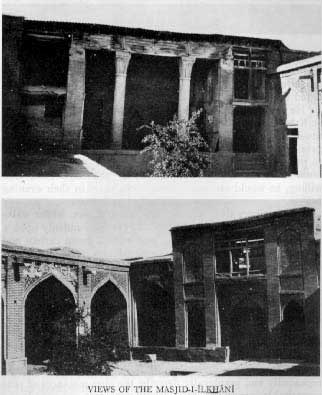
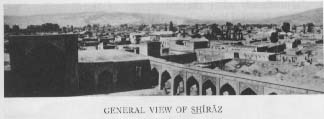 He could not, however, tarry longer in Bushihr. Drawn
as if by a magnet which seemed to attract him irresistibly
towards the north, he proceeded to Shiraz. Arriving at the
gate of that city, he instructed his brother and his nephew
to proceed directly to the Masjid-i-Ilkhani, and there to remain
until his arrival. He expressed the hope that, God
willing, he would arrive in time to join them in their evening
prayer.
On that very day, a few hours before sunset, whilst walking
outside the gate of the city, his eyes fell suddenly upon a
Youth of radiant countenance, who wore a green turban and
who, advancing towards him, greeted him with a smile of
loving welcome. He embraced Mulla Husayn with tender
affection as though he had been his intimate and lifelong
friend. Mulla Husayn thought Him at first to be a disciple
of Siyyid Kazim who, on being informed of his approach to
Shiraz, had come out to welcome him.
Mirza Ahmad-i-Qazvini, the martyr, who on several occasions
had heard Mulla Husayn recount to the early believers
the story of his moving and historic interview with the Bab,
related to me the following: "I have heard Mulla Husayn
repeatedly and graphically describe the circumstances of that
remarkable interview: `The Youth who met me outside the
gate of Shiraz overwhelmed me with expressions of affection
and loving-kindness. He extended to me a warm invitation
to visit His home, and there refresh myself after the fatigues
of my journey. I prayed to be excused, pleading that my
He could not, however, tarry longer in Bushihr. Drawn
as if by a magnet which seemed to attract him irresistibly
towards the north, he proceeded to Shiraz. Arriving at the
gate of that city, he instructed his brother and his nephew
to proceed directly to the Masjid-i-Ilkhani, and there to remain
until his arrival. He expressed the hope that, God
willing, he would arrive in time to join them in their evening
prayer.
On that very day, a few hours before sunset, whilst walking
outside the gate of the city, his eyes fell suddenly upon a
Youth of radiant countenance, who wore a green turban and
who, advancing towards him, greeted him with a smile of
loving welcome. He embraced Mulla Husayn with tender
affection as though he had been his intimate and lifelong
friend. Mulla Husayn thought Him at first to be a disciple
of Siyyid Kazim who, on being informed of his approach to
Shiraz, had come out to welcome him.
Mirza Ahmad-i-Qazvini, the martyr, who on several occasions
had heard Mulla Husayn recount to the early believers
the story of his moving and historic interview with the Bab,
related to me the following: "I have heard Mulla Husayn
repeatedly and graphically describe the circumstances of that
remarkable interview: `The Youth who met me outside the
gate of Shiraz overwhelmed me with expressions of affection
and loving-kindness. He extended to me a warm invitation
to visit His home, and there refresh myself after the fatigues
of my journey. I prayed to be excused, pleading that my
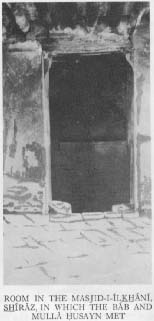
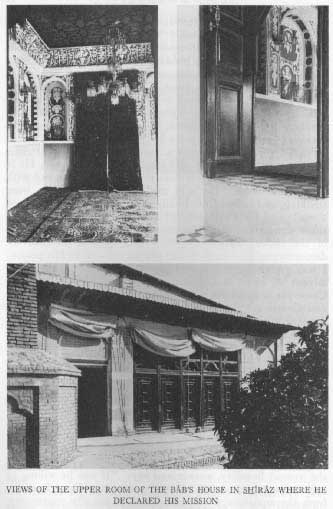
 "`Overwhelmed with His acts of extreme kindness, I arose
 "`That night, that memorable night, was the eve preceding
the fifth day of Jamadiyu'l-Avval, in the year 1260 A.H.(1)
"`That night, that memorable night, was the eve preceding
the fifth day of Jamadiyu'l-Avval, in the year 1260 A.H.(1)
 "`I was revolving these things in my mind, when my
distinguished Host again remarked: "Observe attentively.
Might not the Person intended by Siyyid Kazim be none
other than I?" I thereupon felt impelled to present to Him
a copy of the treatise which I had with me. "Will you," I
asked Him, "read this book of mine and look at its pages
with indulgent eyes? I pray you to overlook my weaknesses
and failings." He graciously complied with my wish. He
opened the book, glanced at certain passages, closed it, and
began to address me. Within a few minutes He had, with
characteristic vigour and charm, unravelled all its mysteries
and resolved all its problems. Having to my entire satisfaction
accomplished, within so short a time, the task I had
expected Him to perform, He further expounded to me certain
truths which could be found neither in the reported sayings
of the imams of the Faith nor in the writings of Shaykh
Ahmad and Siyyid Kazim. These truths, which I had never
heard before, seemed to be endowed with refreshing vividness
and power. "Had you not been My guest," He afterwards
"`I was revolving these things in my mind, when my
distinguished Host again remarked: "Observe attentively.
Might not the Person intended by Siyyid Kazim be none
other than I?" I thereupon felt impelled to present to Him
a copy of the treatise which I had with me. "Will you," I
asked Him, "read this book of mine and look at its pages
with indulgent eyes? I pray you to overlook my weaknesses
and failings." He graciously complied with my wish. He
opened the book, glanced at certain passages, closed it, and
began to address me. Within a few minutes He had, with
characteristic vigour and charm, unravelled all its mysteries
and resolved all its problems. Having to my entire satisfaction
accomplished, within so short a time, the task I had
expected Him to perform, He further expounded to me certain
truths which could be found neither in the reported sayings
of the imams of the Faith nor in the writings of Shaykh
Ahmad and Siyyid Kazim. These truths, which I had never
heard before, seemed to be endowed with refreshing vividness
and power. "Had you not been My guest," He afterwards
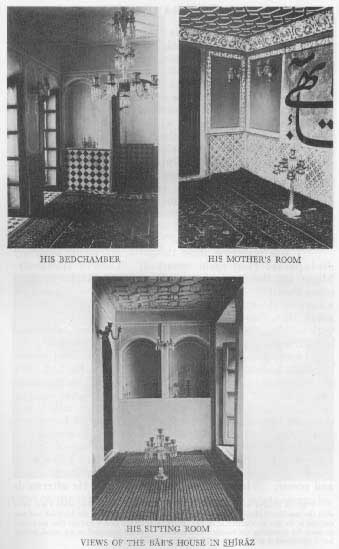 "`At the third hour after sunset, my Host ordered the
dinner to be served. That same Ethiopian servant appeared
again and spread before us the choicest food. That holy
repast refreshed alike my body and soul. In the presence
of my Host, at that hour, I felt as though I were feeding upon
the fruits of Paradise. I could not but marvel at the manners
and the devoted attentions of that Ethiopian servant whose
very life seemed to have been transformed by the regenerating
influence of his Master. I then, for the first time, recognised
the significance of this well-known traditional utterance
ascribed to Muhammad: "I have prepared for the godly and
righteous among My servants what eye hath seen not, ear
heard not, nor human heart conceived." Had my youthful
Host no other claim to greatness, this were sufficient---that
He received me with that quality of hospitality and loving-kindness
which I was convinced no other human being could
possibly reveal.
"`I sat spellbound by His utterance, oblivious of time and
of those who awaited me. Suddenly the call of the muadhdhin,
summoning the faithful to their morning prayer, awakened
me from the state of ecstasy into which I seemed to have
fallen. All the delights, all the ineffable glories, which the
Almighty has recounted in His Book as the priceless possessions
of the people of Paradise--these I seemed to be experiencing
that night. Methinks I was in a place of which
it could be truly said: "Therein no toil shall reach us, and
therein no weariness shall touch us"; "No vain discourse
shall they hear therein, nor any falsehood, but only the cry,
`Peace! Peace!'"; "Their cry therein shall be, `Glory be
to Thee, O God!' and their salutation therein, `Peace!' And
the close of their cry, `Praise be to God, Lord of all creatures!'"+F2
"`Sleep had departed from me that night. I was enthralled
by the music of that voice which rose and fell as He
"`He then addressed me in these words: "O thou who art
the first to believe in Me! Verily I say, I am the Bab, the
Gate of God, and thou art the Babu'l-Bab, the gate of that
Gate. Eighteen souls must, in the beginning, spontaneously
and of their own accord, accept Me and recognise the truth
of My Revelation. Unwarned and uninvited, each of these
must seek independently to find Me. And when their number
is complete, one of them must needs be chosen to accompany
Me on My pilgrimage to Mecca and Medina. There I shall
deliver the Message of God to the Sharif of Mecca. I then
shall return to Kufih, where again, in the Masjid of that
holy city, I shall manifest His Cause. It is incumbent upon
you not to divulge, either to your companions or to any
other soul, that which you have seen and heard. Be engaged
in the Masjid-i-Ilkhani in prayer and in teaching. I, too,
will there join you in congregational prayer. Beware lest
your attitude towards Me betray the secret of your faith.
You should continue in this occupation and maintain this
attitude until our departure for Hijaz. Ere we depart, we
shall appoint unto each of the eighteen souls his special
mission, and shall send them forth to accomplish their task.
We shall instruct them to teach the Word of God and to
quicken the souls of men." Having spoken these words to
me, He dismissed me from His presence. Accompanying
"`At the third hour after sunset, my Host ordered the
dinner to be served. That same Ethiopian servant appeared
again and spread before us the choicest food. That holy
repast refreshed alike my body and soul. In the presence
of my Host, at that hour, I felt as though I were feeding upon
the fruits of Paradise. I could not but marvel at the manners
and the devoted attentions of that Ethiopian servant whose
very life seemed to have been transformed by the regenerating
influence of his Master. I then, for the first time, recognised
the significance of this well-known traditional utterance
ascribed to Muhammad: "I have prepared for the godly and
righteous among My servants what eye hath seen not, ear
heard not, nor human heart conceived." Had my youthful
Host no other claim to greatness, this were sufficient---that
He received me with that quality of hospitality and loving-kindness
which I was convinced no other human being could
possibly reveal.
"`I sat spellbound by His utterance, oblivious of time and
of those who awaited me. Suddenly the call of the muadhdhin,
summoning the faithful to their morning prayer, awakened
me from the state of ecstasy into which I seemed to have
fallen. All the delights, all the ineffable glories, which the
Almighty has recounted in His Book as the priceless possessions
of the people of Paradise--these I seemed to be experiencing
that night. Methinks I was in a place of which
it could be truly said: "Therein no toil shall reach us, and
therein no weariness shall touch us"; "No vain discourse
shall they hear therein, nor any falsehood, but only the cry,
`Peace! Peace!'"; "Their cry therein shall be, `Glory be
to Thee, O God!' and their salutation therein, `Peace!' And
the close of their cry, `Praise be to God, Lord of all creatures!'"+F2
"`Sleep had departed from me that night. I was enthralled
by the music of that voice which rose and fell as He
"`He then addressed me in these words: "O thou who art
the first to believe in Me! Verily I say, I am the Bab, the
Gate of God, and thou art the Babu'l-Bab, the gate of that
Gate. Eighteen souls must, in the beginning, spontaneously
and of their own accord, accept Me and recognise the truth
of My Revelation. Unwarned and uninvited, each of these
must seek independently to find Me. And when their number
is complete, one of them must needs be chosen to accompany
Me on My pilgrimage to Mecca and Medina. There I shall
deliver the Message of God to the Sharif of Mecca. I then
shall return to Kufih, where again, in the Masjid of that
holy city, I shall manifest His Cause. It is incumbent upon
you not to divulge, either to your companions or to any
other soul, that which you have seen and heard. Be engaged
in the Masjid-i-Ilkhani in prayer and in teaching. I, too,
will there join you in congregational prayer. Beware lest
your attitude towards Me betray the secret of your faith.
You should continue in this occupation and maintain this
attitude until our departure for Hijaz. Ere we depart, we
shall appoint unto each of the eighteen souls his special
mission, and shall send them forth to accomplish their task.
We shall instruct them to teach the Word of God and to
quicken the souls of men." Having spoken these words to
me, He dismissed me from His presence. Accompanying
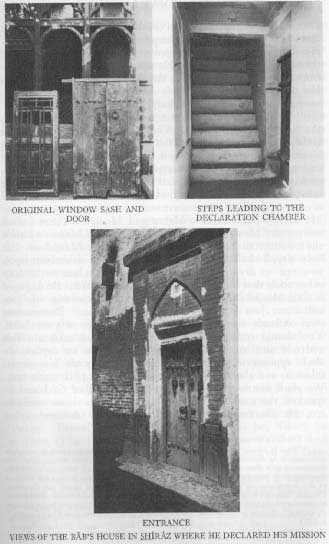 "`This Revelation, so suddenly and impetuously thrust
upon me, came as a thunderbolt which, for a time, seemed
to have benumbed my faculties.(1) I was blinded by its dazzling
splendour and overwhelmed by its crushing force. Excitement,
joy, awe, and wonder stirred the depths of my soul.
Predominant among these emotions was a sense of gladness
and strength which seemed to have transfigured me. How
feeble and impotent, how dejected and timid, I had felt
previously! Then I could neither write nor walk, so tremulous
were my hands and feet. Now, however, the knowledge of
His Revelation had galvanised my being. I felt possessed
of such courage and power that were the world, all its peoples
and its potentates, to rise against me, I would, alone
and undaunted, withstand their onslaught. The universe seemed
but a handful of dust in my grasp. I seemed to be the Voice
of Gabriel personified, calling unto all mankind: "Awake, for
lo! the morning Light has broken. Arise, for His Cause is
made manifest. The portal of His grace is open wide; enter
therein, O peoples of the world! For He who is your promised
One is come!"
"`In such a state I left His house and joined my brother
and nephew. A large number of the followers of Shaykh
Ahmad, who had heard of my arrival, had gathered in the
Masjid-i-Ilkhani to meet me. Faithful to the directions of
my newly found Beloved, I immediately set myself to carry
out His wishes. As I began to organise my classes and
perform my devotions, a vast concourse of people gathered
gradually about me. Ecclesiastical dignitaries and officials
of the city also came to visit me. They marvelled at the
spirit which my lectures revealed, unaware that the Source
"`During those days I was, on several occasions, summoned
by the Bab to visit Him. He would send at night-time
that same Ethiopian servant to the masjid, bearing to
me His most loving message of welcome. Every time I
visited Him, I spent the entire night in His presence. Wakeful
until the dawn, I sat at His feet fascinated by the charm
of His utterance and oblivious of the world and its cares and
pursuits. How rapidly those precious hours flew by! At
daybreak I reluctantly withdrew from His presence. How
eagerly in those days I looked forward to the approach of the
evening hour! With what feelings of sadness and regret I
beheld the dawning of day! In the course of one of these
nightly visits, my Host addressed me in these words: "To-morrow
thirteen of your companions will arrive. To each
of them extend the utmost loving-kindness. Leave them
not to themselves, for they have dedicated their lives to the
quest of their Beloved. Pray to God that He may graciously
enable them to walk securely in that path which is finer than
a hair and keener than a sword. Certain ones among them
will be accounted, in the sight of God, as His chosen and
favoured disciples. As to others, they will tread the middle
way. The fate of the rest will remain undeclared until the
hour when all that is hidden shall be made manifest."(1)
"`That same morning, at sunrise, soon after my return
from the home of the Bab, Mulla Aliy-i-Bastami, accompanied
by the same number of companions as indicated to
me, arrived at the Masjid-i-Ilkhani. I immediately set about
to provide the means for their comfort. One night, a few
days after their arrival, Mulla Ali, as the spokesman of his
companions, gave vent to feelings which he could no longer
repress. "You know well," he said, "how great is our confidence
in you. We bear you such loyalty that if you should
claim to be the promised Qa'im we would all unhesitatingly
submit. Obedient to your summons, we have forsaken our
Mulla Ali hastened to his companions and acquainted
them with the nature of his conversation with Mulla Husayn.
Ablaze with the fire which the account of that conversation
had kindled in their hearts, they immediately dispersed, and,
seeking the seclusion of their cells, besought, through fasting
and prayer, the early removal of the veil that intervened
between them and the recognition of their Beloved. They
prayed while keeping their vigils: "O God, our God! Thee
only do we worship, and to Thee do we cry for help. Guide
us, we beseech Thee, on the straight Path, O Lord our God!
Fulfil what Thou hast promised unto us by Thine Apostles,
and put us not to shame on the Day of Resurrection. Verily,
Thou wilt not break Thy promise."
On the third night of his retirement, whilst wrapt in
prayer, Mulla Aliy-i-Bastami had a vision. There appeared
before his eyes a light, and, lo! that light moved off before
him. Allured by its splendour, he followed it, till at last it
led him to his promised Beloved. At that very hour, in the
mid-watches of the night, he arose and, exultant with joy
and radiant with gladness, opened the door of his chamber
and hastened to Mulla Husayn. He threw himself into the
arms of his revered companion. Mulla Husayn most lovingly
embraced him and said: "Praise be to God who hath guided
us hither! We had not been guided had not God guided us!"
That very morning, at break of day, Mulla Husayn, followed
by Mulla Ali, hastened to the residence of the Bab.
At the entrance of His house they met the faithful Ethiopian
servant, who immediately recognised them and greeted them
in these words: "Ere break of day, I was summoned to the
presence of my Master, who instructed me to open the door
of the house and to stand expectant at its threshold. `Two
guests,' He said, `are to arrive early this morning. Extend
to them in My name a warm welcome. Say to them from
Me: "Enter therein in the name of God."'"
The first meeting of Mulla Ali with the Bab, which was
analogous to the meeting with Mulla Husayn, differed only
in this respect, that whereas at the previous meeting the
Each of the twelve companions of Mulla Ali, in his turn
and by his own unaided efforts, sought and found his Beloved.
Some in sleep, others in waking, a few whilst in prayer, and
still others in their moments of contemplation, experienced
the light of this Divine Revelation and were led to recognise
the power of its glory. After the manner of Mulla Ali,
these, and a few others, accompanied by Mulla Husayn, attained
the presence of the Bab and were declared "Letters
of the Living." Seventeen Letters were gradually enrolled
in the preserved Tablet of God, and were appointed as the
chosen Apostles of the Bab, the ministers of His Faith, and
the diffusers of His light.
One night, in the course of His conversation with Mulla
Husayn; the Bab spoke these words: "Seventeen Letters have
thus far enlisted under the standard of the Faith of God.
There remains one more to complete the number. These
Letters of the Living shall arise to proclaim My Cause and to
establish My Faith. To-morrow night the remaining Letter
will arrive and will complete the number of My chosen disciples."
The next day, in the evening hour, as the Bab, followed
by Mulla Husayn, was returning to His home, there
appeared a youth dishevelled and travel-stained. He approached
Mulla Husayn, embraced him, and asked him
whether he had attained his goal. Mulla Husayn tried at
first to calm his agitation and advised him to rest for the
moment, promising that he would subsequently enlighten
him. That youth, however, refused to heed his advice. Fixing
his gaze upon the Bab, he said to Mulla Husayn: "Why
seek you to hide Him from me? I can recognise Him by His
Though distant in body, these heroic souls are engaged in
daily communion with their Beloved, partake of the bounty
of His utterance, and share the supreme privilege of His
companionship. Otherwise how could Shaykh Ahmad and
Siyyid Kazim have known of the Bab? How could they have
perceived the significance of the secret which lay hidden in
Him? How could the Bab Himself, how could Quddus,
His beloved disciple, have written in such terms, had not the
mystic bond of the spirit linked their souls together? Did
not the Bab, in the earliest days of His Mission, allude, in the
opening passages of the Qayyumu'l-Asma', His commentary
on the Surih of Joseph, to the glory and significance of the
Revelation of Baha'u'llah? Was it not His purpose, by
dwelling upon the ingratitude and malice which characterised
the treatment of Joseph by his brethren, to predict
what Baha'u'llah was destined to suffer at the hands of His
brother and kindred? Was not Quddus, although besieged
within the fort of Shaykh Tabarsi by the battalions and fire
of a relentless enemy, engaged, both in the daytime and in
the night-season, in the completion of his eulogy of Baha'u'llah
--that immortal commentary on the Sad of Samad which
The acceptance by Quddus of the truth of the Bab's
Revelation completed the assigned number of His chosen
"`This Revelation, so suddenly and impetuously thrust
upon me, came as a thunderbolt which, for a time, seemed
to have benumbed my faculties.(1) I was blinded by its dazzling
splendour and overwhelmed by its crushing force. Excitement,
joy, awe, and wonder stirred the depths of my soul.
Predominant among these emotions was a sense of gladness
and strength which seemed to have transfigured me. How
feeble and impotent, how dejected and timid, I had felt
previously! Then I could neither write nor walk, so tremulous
were my hands and feet. Now, however, the knowledge of
His Revelation had galvanised my being. I felt possessed
of such courage and power that were the world, all its peoples
and its potentates, to rise against me, I would, alone
and undaunted, withstand their onslaught. The universe seemed
but a handful of dust in my grasp. I seemed to be the Voice
of Gabriel personified, calling unto all mankind: "Awake, for
lo! the morning Light has broken. Arise, for His Cause is
made manifest. The portal of His grace is open wide; enter
therein, O peoples of the world! For He who is your promised
One is come!"
"`In such a state I left His house and joined my brother
and nephew. A large number of the followers of Shaykh
Ahmad, who had heard of my arrival, had gathered in the
Masjid-i-Ilkhani to meet me. Faithful to the directions of
my newly found Beloved, I immediately set myself to carry
out His wishes. As I began to organise my classes and
perform my devotions, a vast concourse of people gathered
gradually about me. Ecclesiastical dignitaries and officials
of the city also came to visit me. They marvelled at the
spirit which my lectures revealed, unaware that the Source
"`During those days I was, on several occasions, summoned
by the Bab to visit Him. He would send at night-time
that same Ethiopian servant to the masjid, bearing to
me His most loving message of welcome. Every time I
visited Him, I spent the entire night in His presence. Wakeful
until the dawn, I sat at His feet fascinated by the charm
of His utterance and oblivious of the world and its cares and
pursuits. How rapidly those precious hours flew by! At
daybreak I reluctantly withdrew from His presence. How
eagerly in those days I looked forward to the approach of the
evening hour! With what feelings of sadness and regret I
beheld the dawning of day! In the course of one of these
nightly visits, my Host addressed me in these words: "To-morrow
thirteen of your companions will arrive. To each
of them extend the utmost loving-kindness. Leave them
not to themselves, for they have dedicated their lives to the
quest of their Beloved. Pray to God that He may graciously
enable them to walk securely in that path which is finer than
a hair and keener than a sword. Certain ones among them
will be accounted, in the sight of God, as His chosen and
favoured disciples. As to others, they will tread the middle
way. The fate of the rest will remain undeclared until the
hour when all that is hidden shall be made manifest."(1)
"`That same morning, at sunrise, soon after my return
from the home of the Bab, Mulla Aliy-i-Bastami, accompanied
by the same number of companions as indicated to
me, arrived at the Masjid-i-Ilkhani. I immediately set about
to provide the means for their comfort. One night, a few
days after their arrival, Mulla Ali, as the spokesman of his
companions, gave vent to feelings which he could no longer
repress. "You know well," he said, "how great is our confidence
in you. We bear you such loyalty that if you should
claim to be the promised Qa'im we would all unhesitatingly
submit. Obedient to your summons, we have forsaken our
Mulla Ali hastened to his companions and acquainted
them with the nature of his conversation with Mulla Husayn.
Ablaze with the fire which the account of that conversation
had kindled in their hearts, they immediately dispersed, and,
seeking the seclusion of their cells, besought, through fasting
and prayer, the early removal of the veil that intervened
between them and the recognition of their Beloved. They
prayed while keeping their vigils: "O God, our God! Thee
only do we worship, and to Thee do we cry for help. Guide
us, we beseech Thee, on the straight Path, O Lord our God!
Fulfil what Thou hast promised unto us by Thine Apostles,
and put us not to shame on the Day of Resurrection. Verily,
Thou wilt not break Thy promise."
On the third night of his retirement, whilst wrapt in
prayer, Mulla Aliy-i-Bastami had a vision. There appeared
before his eyes a light, and, lo! that light moved off before
him. Allured by its splendour, he followed it, till at last it
led him to his promised Beloved. At that very hour, in the
mid-watches of the night, he arose and, exultant with joy
and radiant with gladness, opened the door of his chamber
and hastened to Mulla Husayn. He threw himself into the
arms of his revered companion. Mulla Husayn most lovingly
embraced him and said: "Praise be to God who hath guided
us hither! We had not been guided had not God guided us!"
That very morning, at break of day, Mulla Husayn, followed
by Mulla Ali, hastened to the residence of the Bab.
At the entrance of His house they met the faithful Ethiopian
servant, who immediately recognised them and greeted them
in these words: "Ere break of day, I was summoned to the
presence of my Master, who instructed me to open the door
of the house and to stand expectant at its threshold. `Two
guests,' He said, `are to arrive early this morning. Extend
to them in My name a warm welcome. Say to them from
Me: "Enter therein in the name of God."'"
The first meeting of Mulla Ali with the Bab, which was
analogous to the meeting with Mulla Husayn, differed only
in this respect, that whereas at the previous meeting the
Each of the twelve companions of Mulla Ali, in his turn
and by his own unaided efforts, sought and found his Beloved.
Some in sleep, others in waking, a few whilst in prayer, and
still others in their moments of contemplation, experienced
the light of this Divine Revelation and were led to recognise
the power of its glory. After the manner of Mulla Ali,
these, and a few others, accompanied by Mulla Husayn, attained
the presence of the Bab and were declared "Letters
of the Living." Seventeen Letters were gradually enrolled
in the preserved Tablet of God, and were appointed as the
chosen Apostles of the Bab, the ministers of His Faith, and
the diffusers of His light.
One night, in the course of His conversation with Mulla
Husayn; the Bab spoke these words: "Seventeen Letters have
thus far enlisted under the standard of the Faith of God.
There remains one more to complete the number. These
Letters of the Living shall arise to proclaim My Cause and to
establish My Faith. To-morrow night the remaining Letter
will arrive and will complete the number of My chosen disciples."
The next day, in the evening hour, as the Bab, followed
by Mulla Husayn, was returning to His home, there
appeared a youth dishevelled and travel-stained. He approached
Mulla Husayn, embraced him, and asked him
whether he had attained his goal. Mulla Husayn tried at
first to calm his agitation and advised him to rest for the
moment, promising that he would subsequently enlighten
him. That youth, however, refused to heed his advice. Fixing
his gaze upon the Bab, he said to Mulla Husayn: "Why
seek you to hide Him from me? I can recognise Him by His
Though distant in body, these heroic souls are engaged in
daily communion with their Beloved, partake of the bounty
of His utterance, and share the supreme privilege of His
companionship. Otherwise how could Shaykh Ahmad and
Siyyid Kazim have known of the Bab? How could they have
perceived the significance of the secret which lay hidden in
Him? How could the Bab Himself, how could Quddus,
His beloved disciple, have written in such terms, had not the
mystic bond of the spirit linked their souls together? Did
not the Bab, in the earliest days of His Mission, allude, in the
opening passages of the Qayyumu'l-Asma', His commentary
on the Surih of Joseph, to the glory and significance of the
Revelation of Baha'u'llah? Was it not His purpose, by
dwelling upon the ingratitude and malice which characterised
the treatment of Joseph by his brethren, to predict
what Baha'u'llah was destined to suffer at the hands of His
brother and kindred? Was not Quddus, although besieged
within the fort of Shaykh Tabarsi by the battalions and fire
of a relentless enemy, engaged, both in the daytime and in
the night-season, in the completion of his eulogy of Baha'u'llah
--that immortal commentary on the Sad of Samad which
The acceptance by Quddus of the truth of the Bab's
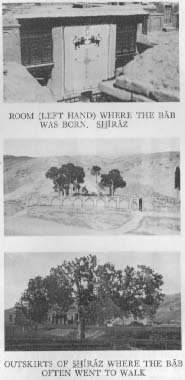
Revelation completed the assigned number of His chosen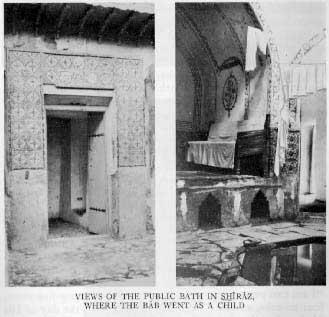 The Bab, whose name was Siyyid Ali-Muhammad,(1) was
born in the city of Shiraz, on the first day of Muharram, in
the year 1235 A.H.(2) He belonged to a house which was renowned
for its nobility and which traced its origin to Muhammad
Himself. The date of His birth confirmed the truth
of the prophecy traditionally attributed to the Imam Ali:
"I am two years younger than my Lord." Twenty-five years,
four months, and four days had elapsed since the day of His
birth, when he declared His Mission. In His early childhood
He lost His father, Siyyid Muhammad-Rida,(3) a man
who was known throughout the province of Fars for his piety
The Bab, whose name was Siyyid Ali-Muhammad,(1) was
born in the city of Shiraz, on the first day of Muharram, in
the year 1235 A.H.(2) He belonged to a house which was renowned
for its nobility and which traced its origin to Muhammad
Himself. The date of His birth confirmed the truth
of the prophecy traditionally attributed to the Imam Ali:
"I am two years younger than my Lord." Twenty-five years,
four months, and four days had elapsed since the day of His
birth, when he declared His Mission. In His early childhood
He lost His father, Siyyid Muhammad-Rida,(3) a man
who was known throughout the province of Fars for his piety
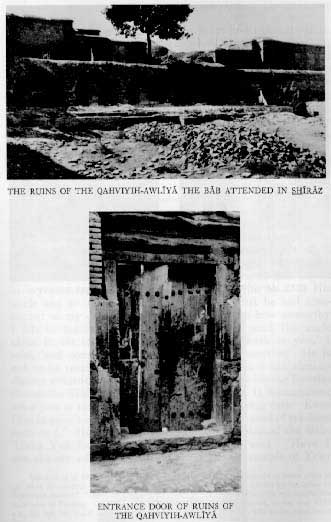
 Shaykh Abid, known by his pupils as Shaykhuna, was
a man of piety and learning. He had been a disciple of both
Shaykh Ahmad and Siyyid Kazim. "One day," he related,
"I asked the Bab to recite the opening words of the Qur'an:
` Bismi'llahi'r-Rahmani'r-Rahim.'(2) He hesitated, pleading
that unless He were told what these words signified, He would
in no wise attempt to pronounce them. I pretended not to
know their meaning. `I know what these words signify,'
observed my pupil; `by your leave, I will explain them.'
He spoke with such knowledge and fluency that I was struck
with amazement. He expounded the meaning of ` Allah,'
of ` Rahman,' and ` Rahim,' in terms such as I had neither
read nor heard. The sweetness of His utterance still lingers
in my memory. I felt impelled to take Him back to His
uncle and to deliver into his hands the Trust he had committed
to my care. I determined to tell him how unworthy
I felt to teach so remarkable a child. I found His uncle
alone in his office. `I have brought Him back to you,' I
said, `and commit Him to your vigilant protection. He is
not to be treated as a mere child, for in Him I can already
discern evidences of that mysterious power which the Revelation
of the Sahibu'z-Zaman(3) alone can reveal. It is incumbent
upon you to surround Him with your most loving care. Keep
Him in your house, for He, verily, stands in no need of teachers
such as I.' Haji Mirza Siyyid Ali sternly rebuked the Bab.
`Have You forgotten my instructions?' he said. `Have I
not already admonished You to follow the example of Your
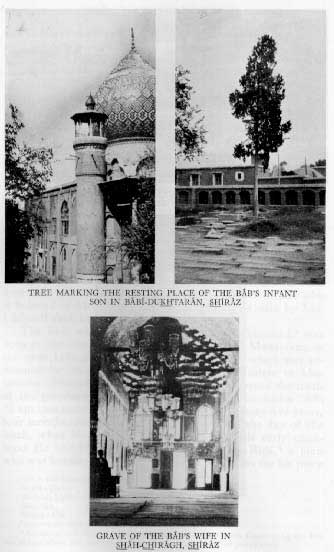
Some years later(2) the Bab was united in wedlock with the
sister of Mirza Siyyid Hasan and Mirza Abu'l-Qasim.(3) The
child which resulted from this union, He named Ahmad.(4)
He died in the year 1259 A.D.,(5) the year preceding the declaration
of the Faith by the Bab. The Father did not lament
his loss. He consecrated his death by words such as these:
The days which the Bab devoted to commercial pursuits
were mostly spent in Bushihr.(2) The oppressive heat of the
summer did not deter Him from devoting, each Friday,
several hours to continuous worship upon the roof of His
house. Though exposed to the fierce rays of the noontide
sun, He, turning His heart to His Beloved, continued to
commune with Him, unmindful of the intensity of the heat
Shaykh Abid, known by his pupils as Shaykhuna, was
a man of piety and learning. He had been a disciple of both
Shaykh Ahmad and Siyyid Kazim. "One day," he related,
"I asked the Bab to recite the opening words of the Qur'an:
` Bismi'llahi'r-Rahmani'r-Rahim.'(2) He hesitated, pleading
that unless He were told what these words signified, He would
in no wise attempt to pronounce them. I pretended not to
know their meaning. `I know what these words signify,'
observed my pupil; `by your leave, I will explain them.'
He spoke with such knowledge and fluency that I was struck
with amazement. He expounded the meaning of ` Allah,'
of ` Rahman,' and ` Rahim,' in terms such as I had neither
read nor heard. The sweetness of His utterance still lingers
in my memory. I felt impelled to take Him back to His
uncle and to deliver into his hands the Trust he had committed
to my care. I determined to tell him how unworthy
I felt to teach so remarkable a child. I found His uncle
alone in his office. `I have brought Him back to you,' I
said, `and commit Him to your vigilant protection. He is
not to be treated as a mere child, for in Him I can already
discern evidences of that mysterious power which the Revelation
of the Sahibu'z-Zaman(3) alone can reveal. It is incumbent
upon you to surround Him with your most loving care. Keep
Him in your house, for He, verily, stands in no need of teachers
such as I.' Haji Mirza Siyyid Ali sternly rebuked the Bab.
`Have You forgotten my instructions?' he said. `Have I
not already admonished You to follow the example of Your
Some years later(2) the Bab was united in wedlock with the
sister of Mirza Siyyid Hasan and Mirza Abu'l-Qasim.(3) The
child which resulted from this union, He named Ahmad.(4)
He died in the year 1259 A.D.,(5) the year preceding the declaration
of the Faith by the Bab. The Father did not lament
his loss. He consecrated his death by words such as these:
The days which the Bab devoted to commercial pursuits
were mostly spent in Bushihr.(2) The oppressive heat of the
summer did not deter Him from devoting, each Friday,
several hours to continuous worship upon the roof of His
house. Though exposed to the fierce rays of the noontide
sun, He, turning His heart to His Beloved, continued to
commune with Him, unmindful of the intensity of the heat
 I have heard Haji Siyyid Javad-i-Karbila'i(2) recount the
following: "Whilst journeying to India, I passed through
Bushihr. As I was already acquainted with Haji Mirza
Siyyid Ali, I was enabled to meet the Bab on several occasions.
Every time I met Him, I found Him in such a
state of humility and lowliness as words fail me to describe.
His downcast eyes, His extreme courtesy, and the serene
expression of His face made an indelible impression upon my
soul.(3) I often heard those who were closely associated with
Him testify to the purity of His character, to the charm
of His manners, to His self-effacement, to His high integrity,
and to His extreme devotion to God.(4) A certain man confided
to His care a trust, requesting Him to dispose of it at
a fixed price. When the Bab sent him the value of that
article, the man found that the sum which he had been
offered considerably exceeded the limit which he had fixed.
He immediately wrote to the Bab, requesting Him to explain
the reason. The Bab replied: `What I have sent you is entirely
your due. There is not a single farthing in excess of
"With what assiduous care He attended those gatherings
at which the virtues of the Siyyidu'sh-Shuhada', the Imam
Husayn, were being extolled! With what attention He
listened to the chanting of the eulogies! What tenderness
and devotion He showed at those scenes of lamentation and
prayer! Tears rained from His eyes as His trembling lips
murmured words of prayer and praise. How compelling was
His dignity, how tender the sentiments which His countenance
inspired!"
As to those whose supreme privilege it was to be enrolled
by the Bab in the Book of His Revelation as His chosen Letters
of the Living, their names are as follows:
I have heard Haji Siyyid Javad-i-Karbila'i(2) recount the
following: "Whilst journeying to India, I passed through
Bushihr. As I was already acquainted with Haji Mirza
Siyyid Ali, I was enabled to meet the Bab on several occasions.
Every time I met Him, I found Him in such a
state of humility and lowliness as words fail me to describe.
His downcast eyes, His extreme courtesy, and the serene
expression of His face made an indelible impression upon my
soul.(3) I often heard those who were closely associated with
Him testify to the purity of His character, to the charm
of His manners, to His self-effacement, to His high integrity,
and to His extreme devotion to God.(4) A certain man confided
to His care a trust, requesting Him to dispose of it at
a fixed price. When the Bab sent him the value of that
article, the man found that the sum which he had been
offered considerably exceeded the limit which he had fixed.
He immediately wrote to the Bab, requesting Him to explain
the reason. The Bab replied: `What I have sent you is entirely
your due. There is not a single farthing in excess of
"With what assiduous care He attended those gatherings
at which the virtues of the Siyyidu'sh-Shuhada', the Imam
Husayn, were being extolled! With what attention He
listened to the chanting of the eulogies! What tenderness
and devotion He showed at those scenes of lamentation and
prayer! Tears rained from His eyes as His trembling lips
murmured words of prayer and praise. How compelling was
His dignity, how tender the sentiments which His countenance
inspired!"
As to those whose supreme privilege it was to be enrolled
by the Bab in the Book of His Revelation as His chosen Letters
of the Living, their names are as follows:
      Mulla  Husayn-i-Bushru'i,
      Muhammad-Hasan, his brother,
      Muhammad-Baqir, his nephew,
      Mulla  Aliy-i-Bastami,
      Mulla  Khuda-Bakhsh-i-Quchani, later named  Mulla  Ali
      Mulla  Hasan-i-Bajistani,
      Siyyid  Husayn-i-Yazdi,
      Mirza  Muhammad  Rawdih-Khan-i-Yazdi,
      Sa'id-i-Hindi,
      Mulla  Mahmud-i-Khu'i,
      Mulla  Jalil-i-Urumi,
      Mulla  Ahmad-i-Ibdal-i-Maraghi'i,
      Mulla  Baqir-i-Tabrizi,
      Mulla  Yusif-i-Ardibili,
      Mirza  Hadi, son of  Mulla  Abdu'l-Vahhab-i-Qazvini,

81


      Mirza  Muhammad-'Aliy-i-Qazvini.(1)
      Tahirih,(2)
      Quddus.
These all, with the single exception of Tahirih, attained
the presence of the Bab, and were personally invested by
Him with the distinction of this rank. It was she who, having
learned of the intended departure of her sister's husband,
Mirza Muhammad-'Ali, from Qazvin, entrusted him with a
sealed letter, requesting that he deliver it to that promised
One whom she said he was sure to meet in the course of his
journey. "Say to Him, from me," she added, "`The effulgence
of Thy face flashed forth, and the rays of Thy visage
arose on high. Then speak the word, "Am I not your
Mirza Muhammad-'Ali eventually met and recognised
the Bab and conveyed to Him both the letter and the message
of Tahirih. The Bab forthwith declared her one of the
Letters of the Living. Her father, Haji Mulla Salih-i-Qazvini,
and his brother, Mulla Taqi, were both mujtahids of
great renown,(2) were skilled in the traditions of Muslim law,
and were universally respected by the people of Tihran,
Qazvin, and other leading cities of Persia. She was married
to Mulla Muhammad, son of Mulla Taqi, her uncle, whom
A word should now be said in explanation of the term
Bala-Sari. Shaykh Ahmad and Siyyid Kazim, as well as
their followers, when visiting the shrine of the Imam Husayn
in Karbila, invariably occupied, as a mark of reverence, the
lower end of the sepulchre. They never advanced beyond
it, whereas other worshippers, the Bala-Sari, recited their
prayers in the upper section of that shrine. The Shaykhis,
believing, as they did, that "every true believer lives both in
this world and in the next," felt it unseemly and improper
to step beyond the limits of the lower sections of the shrine
Mulla Husayn, who anticipated being the chosen companion
of the Bab during His pilgrimage to Mecca and Medina,
was, as soon as the latter decided to depart from Shiraz,
summoned to the presence of his Master, who gave him the
following instructions: "The days of our companionship are
approaching their end. My Covenant with you is now accomplished.
Gird up the loins of endeavour, and arise to
diffuse My Cause. Be not dismayed at the sight of the degeneracy
and perversity of this generation, for the Lord
of the Covenant shall assuredly assist you. Verily, He shall
surround you with His loving protection, and shall lead you
from victory to victory. Even as the cloud that rains its
bounty upon the earth, traverse the land from end to end,
and shower upon its people the blessings which the Almighty,
in His mercy, has deigned to confer upon you. Forbear with
the ulamas, and resign yourself to the will of God. Raise
the cry: `Awake, awake, for, lo! the Gate of God is open, and
the morning Light is shedding its radiance upon all mankind!
The promised One is made manifest; prepare the way for
Him, O people of the earth! Deprive not yourselves of its
redeeming grace, nor close your eyes to its effulgent glory.'
Those whom you find receptive to your call, share with them
the epistles and tablets We have revealed for you, that,
perchance, these wondrous words may cause them to turn
away from the slough of heedlessness, and soar into the realm
 The Bab then summoned to His presence Mulla Aliy-i-Bastami,
and addressed to him words of cheer and loving-kindness.
He instructed him to proceed directly to Najaf
and Karbila, alluded to the severe trials and afflictions that
would befall him, and enjoined him to be steadfast till the
end. "Your faith," He told him, "must be immovable as the
rock, must weather every storm and survive every calamity.
Suffer not the denunciations of the foolish and the calumnies
of the clergy to afflict you, or to turn you from your purpose.
For you are called to partake of the celestial banquet prepared
for you in the immortal Realm. You are the first to
leave the House of God, and to suffer for His sake. If you
be slain in His path, remember that great will be your reward,
and goodly the gift which will be bestowed upon you."
No sooner were these words uttered than Mulla Ali
arose from his seat and set out to prosecute his mission. At
about a farsang's distance from Shiraz he was overtaken by
a youth who, flushed with excitement, impatiently asked to
speak to him. His name was Abdu'l-Vahhab. "I beseech
you," he tearfully entreated Mulla Ali, "to allow me to accompany
you on your journey. Perplexities oppress my
heart; I pray you to guide my steps in the way of Truth.
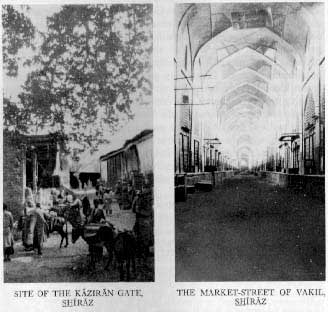
Last night, in my dream, I heard the crier announce in the
market-street of Shiraz the appearance of the Imam Ali,
the Commander of the Faithful. He called to the multitude:
`Arise and seek him. Behold, he plucks out of the burning
fire charters of liberty and is distributing them to the people.
Hasten to him, for whoever receives them from his hands
will be secure from penal suffering, and whoever fails to obtain
them from him, will be bereft of the blessings of Paradise.'
Immediately I heard the voice of the crier, I arose and, abandoning
my shop, ran across the market-street of Vakil to a
place where my eyes beheld you standing and distributing
Mulla Ali tried to appease his troubled heart and to
persuade him to return to his shop and resume his daily
work. "Your association with me," he urged, "would involve
me in difficulties. Return to Shiraz and rest assured,
for you are accounted of the people of salvation. Far be it
from the justice of God to withhold from so ardent and devoted
a seeker the cup of His grace, or to deprive a soul so
athirst from the billowing ocean of His Revelation." The
words of Mulla Ali proved of no avail. The more he insisted
upon the return of Abdu'l-Vahhab, the louder grew his
lamentation and weeping. Mulla Ali finally felt compelled
to comply with his wish, resigning himself to the will of God.
Haji Abdu'l-Majid, the father of Abdu'l-Vahhab, has
often been heard to recount, with eyes filled with tears, this
story: "How deeply," he said, "I regret the deed I committed.
Pray that God may grant me the remission of my sin. I
"I continued my search until I reached them. Seized
with a savage fury, I inflicted upon Mulla Ali unspeakable
injuries. To the strokes that fell heavily upon him, he, with
extraordinary serenity, returned this answer: `Stay your
hand, O Abdu'l-Majid, for the eye of God is observing you.
I take Him as my witness, that I am in no wise responsible
for the conduct of your son. I mind not the tortures you
inflict upon me, for I stand prepared for the most grievous
afflictions in the path I have chosen to follow. Your injuries,
compared to what is destined to befall me in future, are as a
drop compared to the ocean. Verily, I say, you shall survive
me, and will come to recognise my innocence. Great will
then be your remorse, and deep your sorrow.' Scorning his
remarks, and heedless of his appeal, I continued to beat him
until I was exhausted. Silently and heroically he endured
this most undeserved chastisement at my hands. Finally,
I ordered my son to follow me, and left Mulla Ali to himself.
"On our way back to Shiraz, my son related to me the
dream he had dreamt. A feeling of profound regret gradually
seized me. The blamelessness of Mulla Ali was vindicated
in my eyes, and the memory of my cruelty to him continued
long to oppress my soul. Its bitterness lingered in my heart
until the time when I felt obliged to transfer my residence
This episode marks the first affliction which befell a disciple
of the Bab after the declaration of His mission. Mulla
Ali realised from this experience how steep and thorny was
the path leading to his eventual attainment of the promise
given him by his Master. Wholly resigned to His will, and
prepared to shed his life-blood for His Cause, he resumed his
journey until he arrived at Najaf. In the presence of Shaykh
Muhammad-Hasan, one of the most celebrated ecclesiastics
of shi'ah Islam, and in the face of a distinguished company
of his disciples, Mulla Ali announced fearlessly the manifestation
of the Bab, the Gate whose advent they were eagerly
awaiting. "His proof," he declared, "is His Word; His testimony,
none other than the testimony with which Islam seeks
to vindicate its truth. From the pen of this unschooled
Hashimite Youth of Persia there have streamed, within the
space of forty-eight hours, as great a number of verses, of
prayers, of homilies, and scientific treatises, as would equal
in volume the whole of the Qur'an, which it took Muhammad,
the Prophet of God, twenty-three years to reveal!" That
proud and fanatic leader, instead of welcoming, in an age of
darkness and prejudice, these life-giving evidences of a new-born
Revelation, forthwith pronounced Mulla Ali a heretic
and expelled him from the assembly. His disciples and followers,
even the Shaykhis, who already testified to Mulla
Ali's piety, sincerity, and learning, endorsed, unhesitatingly,
Haji Hashim, surnamed Attar, a prominent merchant,
who was well versed in the Scriptures of Islam, recounted
the following: "I was present at Government House on one
occasion when Mulla Ali was summoned to the presence of
the assembled notables and government officials of that city.
He was publicly accused of being an infidel, an abrogator of
the laws of Islam, and a repudiator of its rituals and accepted
standards. When his alleged offences and misdeeds had been
enumerated, the Mufti, the chief exponent of the law of
Islam in that city, turned to him and said: `O enemy of God!'
As I was occupying a seat beside the Mufti, I whispered in
his ear: `You are as yet unacquainted with this unfortunate
stranger. Why address him in such terms? Do you not
realise that such words as you have addressed to him will
excite the anger of the populace against him? It behoves
you to disregard the unsupported charges these busybodies
have brought against him, to question him yourself, and
to judge him according to the accepted standards of justice
inculcated by the Faith of Islam.' The Mufti was sore displeased,
arose from his seat, and left the gathering. Mulla
Ali was again thrown into prison. A few days later, I enquired
about him, hoping to achieve his deliverance. I was
informed that, on the night of that same day, he had been
deported to Constantinople. I made further enquiries and
endeavoured to find out what eventually befell him. I could
not, however, ascertain the truth. A few believed that on
his way to Constantinople he had fallen ill and died. Others
maintained that he had suffered martyrdom."(1) Whatever
Having sent forth Mulla Ali on his mission, the Bab
summoned to His presence the remaining Letters of the
Living, and to each severally He gave a special command and
appointed a special task. He addressed to them these parting
words: "O My beloved friends! You are the bearers of the
name of God in this Day. You have been chosen as the repositories
of His mystery. It behoves each one of you to
manifest the attributes of God, and to exemplify by your
deeds and words the signs of His righteousness, His power
and glory. The very members of your body must bear witness
to the loftiness of your purpose, the integrity of your life, the
reality of your faith, and the exalted character of your devotion.
For verily I say, this is the Day spoken of by God in
His Book:(1) `On that day will We set a seal upon their mouths
yet shall their hands speak unto Us, and their feet shall bear
witness to that which they shall have done.' Ponder the
words of Jesus addressed to His disciples, as He sent them forth
to propagate the Cause of God. In words such as these, He
bade them arise and fulfil their mission: `Ye are even as the
fire which in the darkness of the night has been kindled upon
the mountain-top. Let your light shine before the eyes of
men. Such must be the purity of your character and the
degree of your renunciation, that the people of the earth may
through you recognise and be drawn closer to the heavenly
Father who is the Source of purity and grace. For none has
seen the Father who is in heaven. You who are His spiritual
children must by your deeds exemplify His virtues, and witness
to His glory. You are the salt of the earth, but if the
salt have lost its savour, wherewith shall it be salted? Such
must be the degree of your detachment, that into whatever
city you enter to proclaim and teach the Cause of God, you
should in no wise expect either meat or reward from its people.
Nay, when you depart out of that city, you should shake
the dust from off your feet. As you have entered it pure and
With such words the Bab quickened the faith of His
disciples and launched them upon their mission. To each
He assigned his own native province as the field of his labours.
He directed them each and all to refrain from specific references
to His own name and person.(2) He instructed them
to raise the call that the Gate to the Promised One has been
opened, that His proof is irrefutable, and that His testimony
is complete. He bade them declare that whoever believes
in Him has believed in all the prophets of God, and that
whoever denies Him has denied all His saints and His chosen
The Bab then summoned to His presence Mulla Aliy-i-Bastami,
and addressed to him words of cheer and loving-kindness.
He instructed him to proceed directly to Najaf
and Karbila, alluded to the severe trials and afflictions that
would befall him, and enjoined him to be steadfast till the
end. "Your faith," He told him, "must be immovable as the
rock, must weather every storm and survive every calamity.
Suffer not the denunciations of the foolish and the calumnies
of the clergy to afflict you, or to turn you from your purpose.
For you are called to partake of the celestial banquet prepared
for you in the immortal Realm. You are the first to
leave the House of God, and to suffer for His sake. If you
be slain in His path, remember that great will be your reward,
and goodly the gift which will be bestowed upon you."
No sooner were these words uttered than Mulla Ali
arose from his seat and set out to prosecute his mission. At
about a farsang's distance from Shiraz he was overtaken by
a youth who, flushed with excitement, impatiently asked to
speak to him. His name was Abdu'l-Vahhab. "I beseech
you," he tearfully entreated Mulla Ali, "to allow me to accompany
you on your journey. Perplexities oppress my
heart; I pray you to guide my steps in the way of Truth.
Last night, in my dream, I heard the crier announce in the
market-street of Shiraz the appearance of the Imam Ali,
the Commander of the Faithful. He called to the multitude:
`Arise and seek him. Behold, he plucks out of the burning
fire charters of liberty and is distributing them to the people.
Hasten to him, for whoever receives them from his hands
will be secure from penal suffering, and whoever fails to obtain
them from him, will be bereft of the blessings of Paradise.'
Immediately I heard the voice of the crier, I arose and, abandoning
my shop, ran across the market-street of Vakil to a
place where my eyes beheld you standing and distributing
Mulla Ali tried to appease his troubled heart and to
persuade him to return to his shop and resume his daily
work. "Your association with me," he urged, "would involve
me in difficulties. Return to Shiraz and rest assured,
for you are accounted of the people of salvation. Far be it
from the justice of God to withhold from so ardent and devoted
a seeker the cup of His grace, or to deprive a soul so
athirst from the billowing ocean of His Revelation." The
words of Mulla Ali proved of no avail. The more he insisted
upon the return of Abdu'l-Vahhab, the louder grew his
lamentation and weeping. Mulla Ali finally felt compelled
to comply with his wish, resigning himself to the will of God.
Haji Abdu'l-Majid, the father of Abdu'l-Vahhab, has
often been heard to recount, with eyes filled with tears, this
story: "How deeply," he said, "I regret the deed I committed.
Pray that God may grant me the remission of my sin. I
"I continued my search until I reached them. Seized
with a savage fury, I inflicted upon Mulla Ali unspeakable
injuries. To the strokes that fell heavily upon him, he, with
extraordinary serenity, returned this answer: `Stay your
hand, O Abdu'l-Majid, for the eye of God is observing you.
I take Him as my witness, that I am in no wise responsible
for the conduct of your son. I mind not the tortures you
inflict upon me, for I stand prepared for the most grievous
afflictions in the path I have chosen to follow. Your injuries,
compared to what is destined to befall me in future, are as a
drop compared to the ocean. Verily, I say, you shall survive
me, and will come to recognise my innocence. Great will
then be your remorse, and deep your sorrow.' Scorning his
remarks, and heedless of his appeal, I continued to beat him
until I was exhausted. Silently and heroically he endured
this most undeserved chastisement at my hands. Finally,
I ordered my son to follow me, and left Mulla Ali to himself.
"On our way back to Shiraz, my son related to me the
dream he had dreamt. A feeling of profound regret gradually
seized me. The blamelessness of Mulla Ali was vindicated
in my eyes, and the memory of my cruelty to him continued
long to oppress my soul. Its bitterness lingered in my heart
until the time when I felt obliged to transfer my residence
This episode marks the first affliction which befell a disciple
of the Bab after the declaration of His mission. Mulla
Ali realised from this experience how steep and thorny was
the path leading to his eventual attainment of the promise
given him by his Master. Wholly resigned to His will, and
prepared to shed his life-blood for His Cause, he resumed his
journey until he arrived at Najaf. In the presence of Shaykh
Muhammad-Hasan, one of the most celebrated ecclesiastics
of shi'ah Islam, and in the face of a distinguished company
of his disciples, Mulla Ali announced fearlessly the manifestation
of the Bab, the Gate whose advent they were eagerly
awaiting. "His proof," he declared, "is His Word; His testimony,
none other than the testimony with which Islam seeks
to vindicate its truth. From the pen of this unschooled
Hashimite Youth of Persia there have streamed, within the
space of forty-eight hours, as great a number of verses, of
prayers, of homilies, and scientific treatises, as would equal
in volume the whole of the Qur'an, which it took Muhammad,
the Prophet of God, twenty-three years to reveal!" That
proud and fanatic leader, instead of welcoming, in an age of
darkness and prejudice, these life-giving evidences of a new-born
Revelation, forthwith pronounced Mulla Ali a heretic
and expelled him from the assembly. His disciples and followers,
even the Shaykhis, who already testified to Mulla
Ali's piety, sincerity, and learning, endorsed, unhesitatingly,
Haji Hashim, surnamed Attar, a prominent merchant,
who was well versed in the Scriptures of Islam, recounted
the following: "I was present at Government House on one
occasion when Mulla Ali was summoned to the presence of
the assembled notables and government officials of that city.
He was publicly accused of being an infidel, an abrogator of
the laws of Islam, and a repudiator of its rituals and accepted
standards. When his alleged offences and misdeeds had been
enumerated, the Mufti, the chief exponent of the law of
Islam in that city, turned to him and said: `O enemy of God!'
As I was occupying a seat beside the Mufti, I whispered in
his ear: `You are as yet unacquainted with this unfortunate
stranger. Why address him in such terms? Do you not
realise that such words as you have addressed to him will
excite the anger of the populace against him? It behoves
you to disregard the unsupported charges these busybodies
have brought against him, to question him yourself, and
to judge him according to the accepted standards of justice
inculcated by the Faith of Islam.' The Mufti was sore displeased,
arose from his seat, and left the gathering. Mulla
Ali was again thrown into prison. A few days later, I enquired
about him, hoping to achieve his deliverance. I was
informed that, on the night of that same day, he had been
deported to Constantinople. I made further enquiries and
endeavoured to find out what eventually befell him. I could
not, however, ascertain the truth. A few believed that on
his way to Constantinople he had fallen ill and died. Others
maintained that he had suffered martyrdom."(1) Whatever
Having sent forth Mulla Ali on his mission, the Bab
summoned to His presence the remaining Letters of the
Living, and to each severally He gave a special command and
appointed a special task. He addressed to them these parting
words: "O My beloved friends! You are the bearers of the
name of God in this Day. You have been chosen as the repositories
of His mystery. It behoves each one of you to
manifest the attributes of God, and to exemplify by your
deeds and words the signs of His righteousness, His power
and glory. The very members of your body must bear witness
to the loftiness of your purpose, the integrity of your life, the
reality of your faith, and the exalted character of your devotion.
For verily I say, this is the Day spoken of by God in
His Book:(1) `On that day will We set a seal upon their mouths
yet shall their hands speak unto Us, and their feet shall bear
witness to that which they shall have done.' Ponder the
words of Jesus addressed to His disciples, as He sent them forth
to propagate the Cause of God. In words such as these, He
bade them arise and fulfil their mission: `Ye are even as the
fire which in the darkness of the night has been kindled upon
the mountain-top. Let your light shine before the eyes of
men. Such must be the purity of your character and the
degree of your renunciation, that the people of the earth may
through you recognise and be drawn closer to the heavenly
Father who is the Source of purity and grace. For none has
seen the Father who is in heaven. You who are His spiritual
children must by your deeds exemplify His virtues, and witness
to His glory. You are the salt of the earth, but if the
salt have lost its savour, wherewith shall it be salted? Such
must be the degree of your detachment, that into whatever
city you enter to proclaim and teach the Cause of God, you
should in no wise expect either meat or reward from its people.
Nay, when you depart out of that city, you should shake
the dust from off your feet. As you have entered it pure and
With such words the Bab quickened the faith of His
disciples and launched them upon their mission. To each
He assigned his own native province as the field of his labours.
He directed them each and all to refrain from specific references
to His own name and person.(2) He instructed them
to raise the call that the Gate to the Promised One has been
opened, that His proof is irrefutable, and that His testimony
is complete. He bade them declare that whoever believes
in Him has believed in all the prophets of God, and that
whoever denies Him has denied all His saints and His chosen
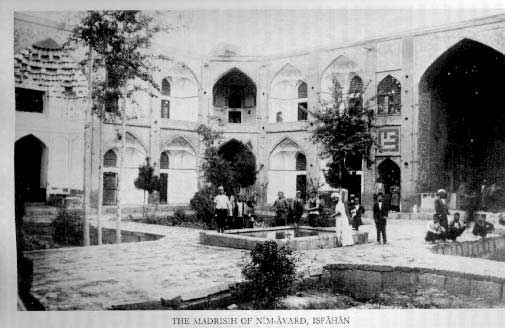 To Mulla Husayn, as the hour of his departure approached,
the Bab addressed these words: "Grieve not that you have
not been chosen to accompany Me on My pilgrimage to
Hijaz. I shall, instead, direct your steps to that city which
enshrines a Mystery of such transcendent holiness as neither
Hijaz nor Shiraz can hope to rival. My hope is that you may,
by the aid of God, be enabled to remove the veils from the
eyes of the wayward and to cleanse the minds of the malevolent.
Visit, on your way, Isfahan, Kashan, Tihran, and
Khurasan. Proceed thence to Iraq, and there await the
summons of your Lord, who will keep watch over you and
will direct you to whatsoever is His will and desire. As to
Myself, I shall, accompanied by Quddus and My Ethiopian
servant, proceed on My pilgrimage to Hijaz. I shall join the
company of the pilgrims of Fars, who will shortly be sailing
for that land. I shall visit Mecca and Medina, and there
fulfil the mission with which God has entrusted Me. God
willing, I shall return hither by the way of Kufih, in which
place I hope to meet you. If it be decreed otherwise, I shall
ask you to join Me in Shiraz. The hosts of the invisible Kingdom,
be assured, will sustain and reinforce your efforts. The
essence of power is now dwelling in you, and the company
of His chosen angels revolves around you. His almighty arms
will surround you, and His unfailing Spirit will ever continue to
guide your steps. He that loves you, loves God; and whoever
opposes you, has opposed God. Whoso befriends you, him will
God befriend; and whoso rejects you, him will God reject."
To Mulla Husayn, as the hour of his departure approached,
the Bab addressed these words: "Grieve not that you have
not been chosen to accompany Me on My pilgrimage to
Hijaz. I shall, instead, direct your steps to that city which
enshrines a Mystery of such transcendent holiness as neither
Hijaz nor Shiraz can hope to rival. My hope is that you may,
by the aid of God, be enabled to remove the veils from the
eyes of the wayward and to cleanse the minds of the malevolent.
Visit, on your way, Isfahan, Kashan, Tihran, and
Khurasan. Proceed thence to Iraq, and there await the
summons of your Lord, who will keep watch over you and
will direct you to whatsoever is His will and desire. As to
Myself, I shall, accompanied by Quddus and My Ethiopian
servant, proceed on My pilgrimage to Hijaz. I shall join the
company of the pilgrims of Fars, who will shortly be sailing
for that land. I shall visit Mecca and Medina, and there
fulfil the mission with which God has entrusted Me. God
willing, I shall return hither by the way of Kufih, in which
place I hope to meet you. If it be decreed otherwise, I shall
ask you to join Me in Shiraz. The hosts of the invisible Kingdom,
be assured, will sustain and reinforce your efforts. The
essence of power is now dwelling in you, and the company
of His chosen angels revolves around you. His almighty arms
will surround you, and His unfailing Spirit will ever continue to
guide your steps. He that loves you, loves God; and whoever
opposes you, has opposed God. Whoso befriends you, him will
God befriend; and whoso rejects you, him will God reject."


|